Study path
Learn it, recall it, then prove it
Read the explanation and work through each example.
Close the notes and explain the main idea yourself.
Attempt the quiz, then revisit only missed concepts.

Section 1: Composition of Air
The air we breathe is a crucial mixture of gases that supports life on Earth. The composition of unpolluted, dry air is remarkably consistent across the globe. It is primarily composed of:
- Nitrogen (N₂): Approximately 78%
- Oxygen (O₂): Approximately 21%
- Argon (Ar): Approximately 0.9% (the most abundant noble gas)
- Carbon Dioxide (CO₂): Approximately 0.04%
Trace amounts of other noble gases like neon, helium, and krypton are also present. The percentage of water vapour in the air is variable depending on location and climate.
Section 2: Air Pollution
Air pollutants are substances introduced into the atmosphere that have harmful effects on living organisms and the environment. Human activities are the primary source of most major pollutants.
Common Pollutants, their Sources, and Effects:
- Carbon Monoxide (CO): A toxic, colourless, and odourless gas produced by the incomplete combustion of carbon-containing fuels, such as in car engines and faulty boilers. It binds irreversibly to haemoglobin in red blood cells, reducing the blood's ability to transport oxygen.
- Sulfur Dioxide (SO₂): Produced from the combustion of fossil fuels (especially coal) that contain sulfur impurities. It is a respiratory irritant and the main cause of acid rain. When SO₂ dissolves in atmospheric water droplets, it forms sulfurous acid (H₂SO₃), which is then oxidised to sulfuric acid (H₂SO₄).
SO₂(g) + H₂O(l) → H₂SO₃(aq)
- Oxides of Nitrogen (NOx): Primarily nitrogen monoxide (NO) and nitrogen dioxide (NO₂). These are formed at the high temperatures and pressures inside car engines and power stations, which cause the nitrogen and oxygen from the air to react. They contribute to the formation of acid rain and photochemical smog.
Acid Rain: This is precipitation with a pH lower than 5.6, caused by sulfur dioxide and oxides of nitrogen reacting with water in the atmosphere to form sulfuric acid and nitric acid. Acid rain has severe environmental consequences, including:
- Damaging limestone buildings and statues: CaCO₃(s) + H₂SO₄(aq) → CaSO₄(aq) + H₂O(l) + CO₂(g)
- Lowering the pH of lakes and rivers, killing aquatic life.
- Leaching essential minerals from the soil, damaging forests.
Catalytic Converters: To reduce vehicle emissions, modern cars are fitted with catalytic converters. These devices use a catalyst (typically a mixture of platinum and rhodium) to convert harmful pollutants into less harmful substances.
- Oxidation of CO: 2CO(g) + O₂(g) → 2CO₂(g)
- Reduction of NOx: 2NO(g) + 2CO(g) → N₂(g) + 2CO₂(g)
Section 3: The Carbon Cycle & Climate Change
The carbon cycle is the natural process through which carbon is exchanged among the atmosphere, oceans, land, and living organisms. Key processes that remove CO₂ from the atmosphere include photosynthesis by plants and algae (6CO₂ + 6H₂O → C₆H₁₂O₆ + 6O₂) and the dissolving of CO₂ in oceans. Processes that release CO₂ into the atmosphere include respiration by plants and animals, decomposition of dead organic matter by microbes, and combustion of carbon-based fuels.
Human activities, especially the combustion of fossil fuels and widespread deforestation (which reduces photosynthesis), have significantly increased the concentration of atmospheric CO₂. Carbon dioxide is a greenhouse gas, meaning it traps heat (infrared radiation) that is radiated from the Earth's surface. The increased concentration of greenhouse gases enhances the natural greenhouse effect, leading to a gradual increase in the Earth's average temperature, a phenomenon known as global warming or climate change.
Section 4: Treatment of Water
Water from sources like rivers and reservoirs is not safe to drink without treatment. The process of making water potable (safe for human consumption) involves several stages:
- Screening: Water is passed through large metal screens to remove large debris like leaves, twigs, and plastic waste.
- Coagulation & Flocculation: A chemical coagulant, such as aluminium sulfate, is added. This causes tiny suspended particles like clay and bacteria to clump together into larger, heavier particles called flocs.
- Sedimentation: The water is stored in a large settlement tank, where the heavier flocs sink to the bottom and are removed as sludge.
- Filtration: The partially clarified water is passed through layers of fine sand and gravel. These filters remove any remaining fine suspended particles.
- Chlorination: A small, carefully controlled amount of chlorine gas or a chlorine-containing compound is added to the water. This acts as a disinfectant, killing harmful bacteria and microorganisms to prevent waterborne diseases like cholera and typhoid.
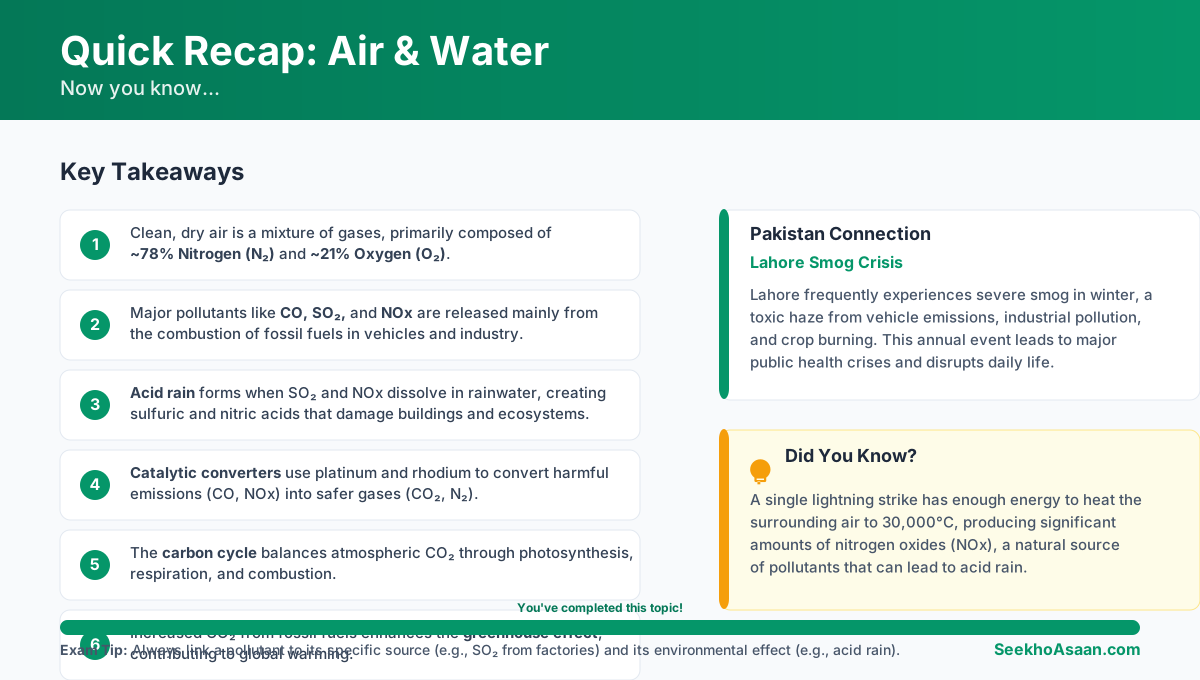
Quick revision infographic
Chemistry · Quick revision
Air & Water
Key concepts
- 01Clean, dry air is a mixture of gases, primarily ~78% Nitrogen and ~21% Oxygen.
- 02Major air pollutants include Carbon Monoxide (CO), Sulfur Dioxide (SO₂), and Oxides of Nitrogen (NOx), mainly from combustion processes.
- 03Acid rain is formed when SO₂ and NOx dissolve in rainwater, creating sulfuric and nitric acids that damage buildings and ecosystems.
- 04Catalytic converters use platinum and rhodium catalysts to convert harmful vehicle emissions (CO, NOx) into safer gases (CO₂, N₂).
- 05The carbon cycle balances CO₂ in the atmosphere through photosynthesis, respiration, and combustion.
- 06Increased CO₂ from burning fossil fuels enhances the greenhouse effect, contributing to global warming.
In winter, Lahore and other cities in Punjab experience severe photochemical smog, a thick haze resulting from high levels of air pollutants. Key contributors include vehicle emissions (high levels of NOx and unburnt hydrocarbons), industrial pollution, and the agricultural practice of stubble burning in both Pakistan and across the border in India. These primary pollutants react in the presence of sunlight to form harmful secondary pollutants like ozone, causing widespread respiratory issues. This environmental crisis highlights the urgent need for stricter emission controls, like ensuring functional catalytic converters in vehicles, and better regional cooperation to manage trans-boundary pollution.
Test your knowledge.
5 explained questions. Har answer ke baad reasoning foran milegi.